Showing posts with label News. Show all posts

Tuesday, May 3, 2011

becoming Bin Ladin


Bin Ladin's henchmen and followers have repeatedly kidnapped, killed, decapitated westerners, often innocent reporters, whose bodies were never recovered. Through the eyes of fellow westerners, those have been considered, barbaric, intolerable acts of cruelty not abiding by the moral standards of our advanced societies.

After the killing of Usāmah bin Lādin, alongside three other men and a woman, the same westerners were pleased to announce that justice has been done. Unfortunately, this was justice the Bin Ladin-way. Breaking and entering, shooting indiscriminately -as none of the 25 extremely capable U.S. Navy Seals were harmed during the shooting-, kidnapping the body and bearing it in the sea as "finding a country willing to accept the remains of the world's most wanted terrorist would have been difficult."

Now that ʾUsāmah bin Lādin "sleeps with the fishes", there is perhaps a timely question to answer. Is this the kind of example we "westerners" will pass on to "those rogue, backward muslims"? What has become of the western democracies in times when even a not-so-common terrorist suffers the exact same end would advocate for his victims? President Obama who thought that "yes we could", Frau Merkel who found Ladin being dead (correction: killed) to be good news and President Sarkozy who greated a preposterous act of violence as "a major event in the fight against terrorism", should think again.

Perhaps, they are becoming just like Bin Ladin

Saturday, March 12, 2011

demotivation


One can think of a number of reasons for not blogging for the last 2 or more months (is it that much already). Being busy is one, although in my case this is not it, despite the fact that over the last two months, I underwent marriage, mild surgery and yet another employment crisis.

Depression, boredom and a general feeling of "n' importe quoi" are probably more valid. In all, there is a significant lack of motivation in talking about something in here, when there is a lot to be done out there. There are issues at stake that demand something more than blogging, but as it turns out in these times of shock and awe one ends up in doing nothing, not even blogging.

I have no idea of what will happen in the next few weeks. In times when a dictator's downfall brings about an increase in oil prices instead of freedom and massive earthquakes fuel more discussions on the economy rather than on the victims, one has to admit that there is little margin for fight against the tsunami of stupidity that is threatening to drown us all.

Still, one has to find the motivation to do something about it. Until then he can at least blog about it.

Tuesday, December 14, 2010

Strike Three - (you 're out...)


This has been the third great general strike since last May. Back then, it all seemed dismal already. Today, a mere 7 months and two more strikes later it looks as if there is no going back.

The most recent (but not the last) of a series of austerity bills hit the ministry desks last night with one more deputy of the ruling "socialists" exlcuding himself from the vote. It was the least he could do not to go down in history as one of those who once gave in to the demands of a foreign, not elected authority that asks for the lowest average income in the EU to be cut down by 10% to 40% and in some cases 60%. Which roughly translates to 10%-40% less spending, 10%-40% less holiday, 10%-40% less education, 10%-40% less health. And 10%-40% more profit for those who used to pay those "surpluss" wages of 700 Euros, the bankers, the CEOs and the company owners who will pay ~15% less taxes this year as a reward for having put up with such overwhelming earnings on behalf of the "lazy" workers of this country.

These workers, will now have to pay the price for having lived on the benefit of "development" for so long. Only this "development" meant a shift of the balance to the bottom. After all this "development" and "expansion" one out of five Greeks lives at the edge of poverty. After all this "growth" you have half a million Greeks unable to visit a doctor. And you see people fighting on the streets for who gets to be the first to look for food in the trash can.

But it was growth for some all right. It was growth for the shareholders who saw their taxes being cut down from 40% to 22% on average over the course of the last 20 years. It was development for the banks who could privatize profits and nationalize debts. It was expansion for those who will now buy this country's forests, coal mines, buses and trains for scrap.
In Europe like in the US the model prevails over the facts. As long as there is "growth" and "development" it's business as usual for those who have their appointed prime ministers cutting the deals. The rest can enjoy poverty.


Update: All of the above, better said -in Greek- here

Sunday, August 1, 2010

going the wrong way


With lorry drivers all over Greece on strike for a mere three days, the minister of transports ordered them to break their strike, threatening to recall their permits if they did otherwise. Two days after that, and with truck drivers keeping their ground, the Greek government has employed the country's military forces to take their place and thus resume the distribution of goods and fuel throughout the country. As of yesterday army trucks are delivering fuel to airports and gas stations and somehow this is supposed to be restoring "stability" in markets and transportations.

My fellow citizens who are relieved to be filling up their tanks and finding fresh apricots on the shelves of their supermarket, should think twice. They may be heading to the nearest beach on their cars and motorbikes but they are probably missing the fact that this is being done at the cost of workers' rights being stepped on in the most audacious of ways.

This is a government, socialist only by name (like so many, nowadays), that first cuts down salaries and pensions to almost half of the population, then sits and stares at prices going up at record stagflation rates and decides to take action only when it is about further attacking worker's rights according to the dictates of the IMF. The new law -the reason for the lorry drivers being on strike- asks for a change in the status of a so-called "restricted access profession". For more than 35 years, in order to become a lorry driver someone had to pay a lot of money to get a permit that he could later transfer at will and at a price he decided. The government -aka its IMF "dictators"- have now called against this "unjust" system and are attempting a "reformation" (and you have to excuse words within double quotes but they are necessary). The new system will thus "open" the profession by rendering the permits so cheap that they become obsolete. Justice? Well, not quite. What the new law says is that the permit will be almost free to give away as long as someone has set up a "transport company" under which designated drivers will be working on a contract. What the law actually aims at, is opening the way for big food and fuel companies into a new market, safeguarded until yesterday by the lorry driver unions. Because that is exactly what is going to happen. In the past, individuals may have struggled for a permit that, given the organization of the union, guaranteed them a living but there is no chance for a middle or lower-class (if those still exist) guy to be able to start up a company. On the other hand, big companies have their way paved for them by the state. They won't even have to pay for the permits before setting up their own transport branches that will hire the ex drivers who will be unable to work without a contract.
Now does this sound like a "justified" "opening" of the profession to you?
What it really is, is a ruthless attempt to restructure the transportations sector from being limited-profit free-entrepreneurial into an oligopolistic trust with great profit margins for big companies, with the subsequent abasement of the workers.

What is even more striking is the credulity and submission with which the media have supported the government's decisions, first to force the lorry drivers to end their strike and then to bring the soldiers on the streets delivering gasoline as if Greece has suddenly become North Korea. No talk about workers' rights abuse, no talk about dangerous connotations whatsoever.
But the worst part comes when one sees the public opinion dozing off in this media-administered apathy. As the country is experiencing cataclysmic changes in every possible aspect of everyday life, people are actually backing up the government by demanding this strike be over. That is, they are granting officials the right to undermine the future of thirty thousand people, being too short-sighted to see that what happens to the lorry drivers today, will be happening to them tomorrow.

One fifth of the Greek population is living on the verge of poverty. 18% of Greeks will not visit a doctor for not being able to afford it, some 20% have reduced their spending on everyday goods like bread and milk, but in the end what really matters is that the "poor Greeks" get to have a five-day, well-deserved, overpriced summer vacation which is being ruined by them bloody truck drivers. So "bring on the troops", "stop the strike", "put them behind bars" for wanting to maintain their working status. Everything is acceptable as long as people can ride their cars off to a nearby beach.

Well, it's not!

I hope -for the sake of us all- that people start thinking with a clearer mind once the summer is over and sunbathing will no longer be their first and only priority.
Until then and with the lorry drivers holding firm at a brave standstill, it looks like everyone else is going the wrong way.

Saturday, July 31, 2010

life in the afternoon


With summer holiday just about to begin, I now know which book to take with me to the beach. This year, it's going to be "Death in the afternoon" by Ernest Hemingway. Not so much for the fun of it, or for an obvious debt in reading it (probably being Hemingway's most "Spanish" of books) but mostly because this book seems like the ideal way to lightly ponder about a long-lasting debate on the future of Spain's bullfighting tradition.

Were he alive today, Hemingway, a passionate bullfighting "aficionado" ever since -the legend says- witnessing the Fiestas de Pamplona back in 1920, would have suffered a blow facing last Tuesday's Catalan Autonomous Parliament's decision to abolish bullfighting in Catalunya. Given the region's historical background and its constant drive for breaking its bonds with anything that is Spanish, it is hard to see perceive this decision completely decoupled from politics. In fact, it would suffice to look at the distribution of votes on the matter to realize a -not so strange- correlation between an assumed sensitivity for animal rights and political views. In all, it was a heavily divided vote, with representatives of the local nationalist parties being strongly in favour of the abolition act, in contrast to those of the moderate ones who maintain stronger links with the Central Government.

In what concerns animal rights I am not sure how big this step is. In total, the bulls killed in arenas worldwide should not be more than a hundred every year, a number that is far inferior to the pigs slaughtered in the same period in the Catalan province alone to supply its sensitive citizens with a great variety of sausages. The obvious argument that bulls suffer an agonizing death in the bullring, whereas animals slaughtered for their flesh are killed "scientifically" does not make me feel a lot better. A great number of animals are still being horrendously tortured during drug and chemical testing and death is probably agonizing no matter the procedure of extermination being followed. I can understand the shock of a sensitive citizen at the sight of a blood-squirting, animal dying in its prime but one has to agree that there is a clear difference between slicing the throat of a baby lamp before putting it on a spit and leading a raging bull in the arena against a group of men, who have been trained throughout their lives into treating the animal with utter respect.

No matter one's opinion on bullfighting, he has to admit that the whole point of it goes far beyond simply killing the bull. As a long-standing tradition, it goes a long way back to ancient ceremonies with a great deal of symbolism embedded so deeply that has become invisible today to short-sighted modernists who choose to see bullfighting as a display of barbarism but find the running-over of animals on the highways an inescapable side-effect of progress. Yes, bullfighting is a remnant of old times, and yes a "corrida" is a hard sight to which I would think twice before submitting my children, but then again, are all things of old destined to be abolished? and to what extent is a dying bull more offensive as a sight than what one can see on TV?

I cannot say I am 100% pro-bullfighting, although I have enjoyed a couple of "corridas", and I am not the passionate fan Hemingway was, even if I appreciate a well-performed "Veronica" and can distinguish a "pase de pecho" from a "pase de desprecio". In all, I see a great deal of hypocrisy in trying to ban an activity that is has its roots in the veneration of an animal and during which animals are treated with extreme respect if not still considered sacred. Those who have never been in a bullfight, or have never read about them (by "Papa" Hemingway or anyone else) may not be aware of the fact that the bull is treated by the crowd with the same respect and admiration as the "torero", that the bullfighter is to be booed and ashamed if the animal is not killed properly (in a way that it suffers less, that is) and that in some -extreme- cases the bull can be "pardoned" by the fighter if the crowd demands it as a reward for its bravery (see for instance the great Jose Tomas pardoning a bull in Barcelona here).

But in the end, we live in a democracy and the decision of a Parliament is to be respected so there is to be no bullfighting in Catalunya as from January 1st 2012. And so the representatives of the people have decided that upon facing a bull instead of grabbing it by the horns, they might as well jump over it. Or even worse, pretend the bull is simply not there...

Monday, July 26, 2010

It's always the 26th


On July 26th 1953, some 130 men badly trained, poorly armed, wearing second-hand military uniforms, stormed the barracks of La Moncada in Santiago de Cuba at daybreak. As the attack was pushed back by the soldiers of Fulgencio Batista's military regime, a great part of the insurgents died on the spot. Others were executed the morning after and the rest of them were captured in the following days, tortured, trialed for treason and imprisoned for life.
They did not, however, serve for life. For it only took five years and 158 days for the man who had led them against La Moncada to finally triumph in kicking Batista and Co. out of Cuba. Fidel Castro's first official decree ordered their liberation and the declaration of July 26th as a national holiday.

Last week, that same man, Fidel Castro, having outlived nine U.S. presidents, several CIA-orchestrated attacks against the state of Cuba and himself, made an official appearance after being considered seriously ill (at some times even at the verge of death) for more than a year. He looked feeble but in good humour and even had time to talk to the people for a couple of hours, for remaining silent has never been his thing ever since he defended his own self in the trials of La Moncada movement.

Castro will turn 84 next month but will still be at the center of attention of the whole country for today's celebrations of the National Holiday commemorating the attack on La Moncada. Fifty seven years after that first attempt to change the lives of the Cuban People, he is something more than a talisman of the state he rescued from the gangsters and the pimps. He is still active, taking decisions, forming policies and even committing errors, something Bill Clinton (to name only one) can only match with explaining the way he led the World Economy to ruins to University students all over the planet. (His fee for such "inspired" talks amounts in the thousands, they say, but maybe he plays the sax for free on intermission).

In the meantime, Castro, once the pole of an "axis of evil", demonized for trying to impose a "failed economical system" on the poor Cubans, is seeing how his country sails through the latest international economic crisis, the third one since he took over. I guess he must be entertained with the way his fellows in the US and Europe are cutting down salaries and pensions, watching unemployment rise and public spending decrease. I also guess that by now, having been harshly criticized for nationalizing banks and companies, he must be entertained with how European Governments are using taxpayers money to rescue private banks.
I 'm also guessing Castro, having been repeatedly accused for his insistence on not liberating political prisoners, will be laughing at the new laws in Europe and elsewhere forcing women not to wear burkha, forcing everybody to carry new, biometric passports, registering mobile phones, allowing landlines to be tapped "under special circumstances" e.t.c.

And I 'm guessing Castro will be having the time of his life today. Seeing Cuba maintaining its dignity in times that even sovereign states are being bullied by the IMF and some arbitrary world-dictators named G20. Seeing that Cuba -in the way he has defended it against the wishes of "liberals" worldwide- has not had the luck of Haiti or Bolivia, thus it cannot be devastated by natural catastrophes like earthquakes or un-natural ones like Lehman Brothers.

For Castro, it may not "always be the 26th" (as Omara Portuondo sings in this beautiful anthem) but in the end it looks like history may absolve him after all.

Thursday, May 6, 2010

this is your future


There is one clear indication that a society is being destabilized and that is the rise of petty crime. This has been no secret in Greece over the last months. Thefts, muggings, break-ins have increased dramatically not only in the metropolitan areas but throughout the country. Anyone who would refuse to connect this to the current financial crisis would be short-sighted. The crisis is here and it is only financial, but in a society that is so geometrically centered around money, it has assumed dimensions beyond control. A financial crisis has become political, social, moral and -alas- intellectual. Seeing how literally every argument can be twisted, distorted and turned on its head, watching the futility of all measures and protests, one cannot but wonder. Is this the end?

Yesterday three people died during a violent outbreak at the margin of massive protests against the passing of an "austerity bill" that the Greek Government feels obliged to put forward to avoid bankruptcy. The Government is right in suggesting harsh measures out of this dead-end. The Government is wrong in putting forward these measures, which are unjust and whose radicalism is limited to the way it will change poor people's lives. The people have every right to be furious against such measures that limit "austerity" to the lower and middle classes and leave the great majority of the privileged untouched. And some intellectuals are right in pointing out that the measures are futile as they will act only in support and maintenance of the current political system of corruption, injustice and impunity.

There is a new demonstration scheduled for this evening at the same time the bill is going to be voted in the parliament. The people are right in wanting to have a memorial service to the three dead workers. But the people will be in the wrong if they let their anger to drive them down to hatred and violence. The people will be in the wrong if they lose the moral advantage they have always had against their corrupted governments. It is not a question of compliance, submitting to external powers or serfdom. It is purely a matter of survival.

People will be in the wrong if they allow their lives to become subject to pessimism, fear and violence. It is true they have been the constant victims of unjust governments but if the time has come to take things into their own hands -and let us hope it has- they must do so in full responsibility. They cannot -should not- let this society crumble down into a chaos of insecurity that will give rise to "Saviours", bringers of "ultimate solutions", "leaders of the people". We have seen this happen in the past, let us not be the ones who will witness its resurrection.

"Invisible hands" can easilly turn into "iron hands". This is the way it has been planned. They think that the passing from the "rule of the markets" into the "rule of everything" will be assumed physically and with the subservience of a man facing a natural disaster. But this can only happen if we let it happen. In our heads. If we stubbornly keep thinking that the "markets" is the 21st centuries equivalent for "nature", that money is something more than a commodity and that the laws of economy lie beyond and above those of physics.

This is the "dream" they have for us. This is our nightmare. So, let us do ourselves a favour and wake up.

Monday, November 30, 2009

Greece of the Greek Christians (?)


On December 30th I am to receive guests from abroad. Two really good friends of mine are planning to visit me in Athens for New Year's eve and spend a week or so in the "cradle of civilisation" before heading back to Spain. While in Greece, they will have the chance to "live their myth" as the Greek Tourism Organisation's slogan will undoubtedly urge them to. This includes the Acropolis, museums and ruins, greek hospitality, great food and walks around the center of an -otherwise- ugly-ish city.

For us Greeks that live here however, the ones that have chosen to come back and make a living and the ones that will carry on living here after my friends are gone the "myth" is somehow more complicated. That is because we'll have to keep living in a country where 60% of the population describes himself as conservative and where people have a better opinion about "neoliberalism" than the "left".

The Greek "myth", in the form of the Greeks' ideological Atlas was published in yesterday's Kathimerini and can be found here for the Greek readers who care reading it. The non-Greeks should not feel bad about it, for various reasons. One one hand it's true that they are not in the position of reading Euripides or Plato from the prototype but on the other they don't have to live in a country where more than half of the people would like their religion to be declared on their official documentation. Where 65% still consider "marijuana is bad" but somehow manage to smoke in every single restaurant, bar AND hospital. Where every parent is trying to get his dear son out of the army but where an outstanding 66% is in favour of keeping the military service compulsory. Trully, my friends cannot appreciate Aeschylus or Thucidides but neither do the Greeks, who read on average 1.1 books per year, and who are so fond of "knowledge" that 7 out of every 10 demand that the teaching of religion (the ONE religion) in schools be kept mandatory.

Yes, my friends are more than welcome to live their myth in Greece. A country of warm, smiling people, who prosper under an eternal sun. What the Greek Tourism Organization forgot to mention in the ad is that 60% of these warm, smiling Greeks does not agree that the rights of the ones charged (which means NOT convicted yet) with terrorism are to be respected. I just thought I should warn them.

Thursday, November 5, 2009

ideas live for more than 101 years

...because there is no substantial difference between the zoologist or the botanist that classifies a recently discovered plant under the name of Elephantopus spicatus Aubl., (a name already provided to him by a system) and an Omaha priest that defines the objective conditions, which will assign the social status of a new member of the clan, by granting him the available name of "old-hoof-of-aged-bison".
In both cases, they know very well what they are doing.

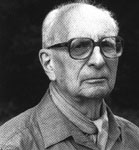
Claude Levi Strauss
La pensee sauvage

Wednesday, February 18, 2009

leave the keys on the engine


I read this for the first time in an article in the Times and was reminded of the story reading about it again in Greek newspapers yesterday. More than 3000 cars (most of them luxurious vehicles) have been confiscated by the Dubai authorities after having been abandoned at the parking lot of the Dubai International Airport. Stricken by the crisis, their owners had no choice but to leave them there before taking flight from what used to be the Mecca of real estate economy. That was before the bubble burst. Now that it has, all those aspiring entrepreneurs could think of was to abandon the sinking ship leaving everything behind. Most of the cars had the keys on the engine. And in many back seats, there were piles of unpaid bills, bounced checks and overdraft credit cards. A few have even bothered to leave an apologetic note:

"So long and sorry for everything!"

I was thinking about these abandoned cars -as symbols of jobs that remain undone- while getting ready to leave Barcelona next week, leaving a number of pending issues behind (almost all of them work-related). It then occurred to me that I might look like one of those car-owners "abandoning the ship". I even remembered my boss using this exact term in a sudden outburst of poetic despair one day last December.

I don't think of myself that way though. Next week, when I come in to pick up my stuff I 'll have the sense I am leaving as a gentleman and not as a coward. No unpaid bills, no unfinished reports, no traces of latent procrastination in the back seat. Instead of a goodbye note, I will be leaving my boss with 100 pages of well-documented results. I 'll then load 60G of data on my external hard disc drive and clean up my desk.

The car may stay here but I'll be taking the keys with me.

Monday, February 2, 2009

a day in the life of Francois S.


But not just any day. A particular Tuesday, September 9th 2008.

Early in the morning of said Tuesday, Francois S. enters the bakery "El Pan" in a poor neighborhood of Badalona. He has not slept well. The night before it rained for the first time after many weeks and he had to seek shelter under a nearby bridge. He is weary and starving as he goes into the bakery past the cashier, reaches out, grabs a baguette and attempts to leave without paying. The woman at the cashier also reaches out and manages to grab the other side of the baguette. She doesn't let go until Francois S. threatens her in french, pushes her away trying to take the bread out of her hands. As she holds firm, the baguette is broken in two and Francois S. flees the bakery with only half of the bread. Later on the same day, upon being arrested by local policemen he still has some crams of that half baguette all over his ragged shirt.

Two days ago, Francois S. is under trial for having stolen half a baguette. He is tried in absentia as the authorities had no way to locate the bridge under which he is currently sleeping. With or without him present, the public prosecutor asked for the maximum penalty to be imposed against Francois S. Eighteen months for the violent robbery of half a loaf of bread.

It could have been a mockery of Victor Hugo's "Les Miserables" with Francois as Jean Valjean and with the attorney playing the role of Javert. Only it is a true story and you can read about it here.

In case the prosecutor has not read the book, he may want to know that in the end, Javert commits suicide
by jumping from a bridge into the Seine. And although the river Besos, flowing through Badalona, may not be deep enough to serve for this purpose, he may end up meeting Francois S. still sleeping below one of the bridges.

Wednesday, January 14, 2009

once the bombing has stopped...


...the siege will still continue.

"On 13 November production at Gaza’s only power station was suspended and the turbines shut down because it had run out of industrial diesel. This in turn caused the two turbine batteries to run down, and they failed to start up again when fuel was received some ten days later. About a hundred spare parts ordered for the turbines have been sitting in the port of Ashdod in Israel for the last eight months, waiting for the Israeli authorities to let them through customs. Now Israel has started to auction these parts because they have been in customs for more than 45 days. The proceeds are being held in Israeli accounts."

Tuesday, January 13, 2009

on freedom of speech (and other demons)


Let's say tomorrow I wake up and go to work to give my lab meeting seminar, wearing a T-shirt like this one. What will the reaction be? Some may look interested, others might congratulate me for making a statement, there will be the ones who will find it a bit irritating. Will anyone care to fine me with 3000 euros? I guess not.

Nonetheless, this is what happened to Frederic Kanoute, FC Sevilla's striker for showing off his T-shirt after scoring a goal against Deportivo La Coruna in last Wednesday's Spanish Cup game. Even worse, Kanoute just escaped a fine of 30.000 euros since the message on his shirt (reading the word "Palestine" in multiple languages) "bore no direct references to violence"! It seems absurd that such a penalty comes directly from the penal code of the Spanish Football Federation in accord with the one set by UEFA. T-shirts with political messages are strictly forbidden, and of late even players taking off their shirts in celebrations are to be shown a yellow card. Such is the mind of people who run world football nowadays.

It seems that according to them, football players are only to score silent goals, they are to keep their opinions to themselves and they are to be severely punished if they choose to defy the shameful "omerta" that fines a T-shirt reading "Palestine" as much as tens of fans firing flares against the visitor crowd (it happened in Espanyol-Barcelona last October). The reasoning is as simplistic as is false. Football players, they tell us, as all athletes, are role models for young people. Their image comes in every home through TV. They simply cannot be allowed to transmit messages of any sort. What they don't tell us is that it is perfectly normal to transmit a number of messages, ALL strangely related to buying sponsored products, during the same football games, while the players are to perform silently and in accord with carefully spelled out instructions. Neither do they tell us that the TV broadcasting of football games is by far the greatest source of profit of all footballing federations on the planet and that on top of making millions out of the football players' efforts they claim the right of dictating their "politically correct" behaviour.

But should it be this way? Would you keep working for someone who would fine you if you wore a T-shirt with a political message? And what limits are there to freedom of speech? Is "Fight global warming" acceptable and "Kill all hippies" punishable? It just seems unfair to me that football players are free to wear T-shirts that read "Jesus Saves" but a message like "Save the people of Palestine" gets a fine of 30.000 euros!

But UEFA's bright minds should have known better. And as football fans throughout the world are something more than numb morons destined to buy PlayStations and Heineken six-packs, over the last two weeks, messages like "Free Palestine" and "Stop the War" have been appearring more and more often among the crowds in all great European stadia. It looks like we, football-"consumers", have already been contaminated by dissident voices like Kanoute's.

Or perhaps, we have never needed to.

Saturday, December 13, 2008

same shit, different country


On the left side, Jean Charles de Menezes, a 29-year old Brazilian citizen who lost his life two and half years ago in the London Metro. On the right, Osman Hussain, the supposed terrorist, after whom the Metropolitan Police of London were after in the aftermath of the July 2006 attacks. The striking (???) similarity between the two men, tragically misled two Scotland Yard firearms officers who gunned down de Menezes inside the train at Stockwell Station before he could even say a word...

The jury initially rejected the two officers' recount of the "incident" and a significant amount of doubt is still remaining on whether the killing could by any means be justified.

Despite of all that, I read on today's news that Scotland Yard is about to allow the two officers to return to frontline duties.

And I can only think that for as long as governments keep drifting away from the majorities that have elected them, for as long as the establishment keeps turning its back at the people who are supposed to sustain it, and for as long as the "law enforcers" think more on the enforcement than the actual laws, then tear-gas cannisters are about to be going out of stock more and more often. 

Monday, December 8, 2008

on the sunny side of the street


Walking back home late last night, alone through the streets around Arc de Triomfe and la Ribera, as my two most beloved cities stood at the opposite coasts of the same sea.

Athens in flames, finally facing its mostly underestimated contradictions, while Barcelona was serenely cruising into the uncompromising limbo of an enduring prosperity.

Going down carrer del Commerc with Interpol singing through my headphones:

"sleep tight, grim rite, we have two thousand couches when you can sleep tonight"

I passed by the front of a bank, one such as those burning in the Athenian major avenues, when I saw a homeless guy -one more of the many- who, unable to spot one of the couches Interpol were singing about, had found refuge in the little space, cramped between to ATM machines.

I wondered what he might think if I told him about my angry compatriots' bank-burning back in my home town. And whether he would even care knowing. Equally unaware of his thoughts, his dreams or nightmares, indifferent to the sufferings of Athens, Barcelona carried on her gaudy, sleepless night.

Tomorrow, this homeless guy will wake up. And maybe one day, he too will stand up between two burning ATMs.

Tuesday, November 4, 2008

agreements of gentlemen


I 'd like to take a deep breath and talk about my father.

Not in the way one talks to his analyst -although my Freudian connection with him is probably more complex than I think. My intention is not to praise or put him to trial. It's just that reading the news that come from my beloved country reminded me of him in a very special way. You see, my father belongs to this post-war generation that relieved from the trials and tribulations of the occupation, hunger and civil war, felt stronger and more courageous to take up any task, no matter how difficult. Most importantly he belongs to the part of his generation, that was not subsequently let down by increasing corruption, lack of meritocracy and eventual disdain for any sort of legitimate effort in order to prosper. Throughout his life he has always remained what John Lennon referred to as "the working class hero", constantly striving within the confined limits of a system that rewarded decency with scorn and cunningness with praise.

For his firm stance he was eventually recompensed with an average pension, which he disgracefully considers slim when looking back to all these years of hard work and shattered ambitions. I would also dare saying that he feels a bit ashamed in front of his family, us, me in particular being his elder and only son. Most likely he is completely unaware of the fact that to my eyes -my 30-year old grown-up eyes and not the ones of a small kid-admirer of his strong dad- he IS the "hero" John Lennon sings about. And of the fact that to me he is the prototype of a gentleman, deserving the greatest respect.

What is so shameful is that his own country doesn't agree with that. At all. As I browse through the greek media on the web, reading about the economical crisis about to hit Greece with the strength of a level-5 hurricane, I hear that the Greek Government is preparing a bill to pass 28 billion Euro to the already "suffering" banks. Moreover, we -the taxpayers and my dear dad among them- hear that this "deposit" is to be done in the most urgent and immediate fashion. This transaction, we are told, is going to be conducted in the form of a "gentlemen agreement", bypassing any bureaucratic obstacles and formalities.

Then I take a moment to think about my dear dad, who throughout my teenage and early adolescent years, has relentlessly opposed my criticism to the system, the banks and our politicians, always giving them the benefit of the doubt. I think about him, sitting on his favourite chair (his back is a bit sensible to armchairs), watching the news and listening about how all these bankers and their golden boys are about to put their "gentlemen" hands on his hard-worked earnings, in order to re-assure him of his savings. And I think about him listening to this "agreement of gentlemen" realizing that throughout his working life, no rule was ever bent for him, no bureaucratic procedure was ever speeded up to assist him, no small letters were ever written to his benefit, no bill was ever passed to make things easier for him. And I just wonder if he -tired and weary as he must be growing in his age- gets the wrong idea and thinks that all of this was never done for him because he is not a gentleman. I am worried with him considering the bloodsucking, mobster-like bankers with their obvious hand-shaking and the behind-doors hand-kissing to be the real gentlemen, while in fact he is more of a gentleman than all of them together will ever be.

There's nothing worse than being deceived at the end of your years and I am worried about my father, too worried that he might be deceived. And I can simply wish they never get to him and that someone gets to them first.

It may be that I am talking nonsense once more, that I am missing the point, that I understand nothing about economy or politics. That I am acting like a small kid who somehow gets the feeling his dad is being treated un-rightfully and is pissed off.
But then again, I think it is very healthy to get pissed off every now and then.

Monday, September 29, 2008

the invisible hand made visible


On my way to the lab today, the usual stop at the reception to check the newspapers' headlines. The front page story being the same in all of them. The awaited rescue of some of the U.S. greatest -until very recently- banks and insurance companies by the biggest state-funded operation in history. I remembered an old post some time ago related to the "invisible hand" of the "markets", meaning their "ability" to re-adjust themselves under pressure and thought that the invisible hand was finally made visible.

It's funny isn't it? I have asked myself again and again even in past pages of this blog about economy-related stuff. Where does all the money go?, what shapes the stock market prices? and similar questions have puzzled me from time to time. It seems that despite all my questioning in older posts (and pardon the substantial self-referencing in this one), there was not much to question about. In this sense, I would urge you to NOT go back and read those previous posts because they simply talk about stuff that do not make sense anymore. It's not that things have changed, no. It's just that under the current crisis (or depression, or whatever you call it) economy cannot hide from itself any longer.

There are no invisible hands. Perhaps someone has tried to convince us about that in times of "prosperity" when everything is going as planned, because (they tell us) the markets function on their own -natural- way (that is without control). But when things really go out of control, situation gets out of hand, and banks go out of cash, then the state comes to the rescue. This -we are told- is done to save the economy, the same economy whose prime advantage was that as long as it run uncontrolled, left nothing to worry about. The new style is this. When all goes well, markets function because they are free and all the state should do is lay off private enterprise. But when the shit hits the fan the state should better put its Superman cape on and pay 700Bi to save the poor companies from going bankrupt. This translates into the following common truth: Taxpayers should get no profit from wealthy companies making money. Instead they should chip-in when the same companies are in trouble. Liberal when profitable, state-funded when problematic.

No wonder, private companies are always well-off and it's only the nationalized ones to bring all the burden.

We should not be surprised. The new dogma is like the old dogma. It has always been thus and will always be so. It's just that now it's too damn obvious not to see it.

Friday, September 19, 2008

and then there were three


There are a number of ways for one to realize he is getting old. The most painful being without doubt, loss. By the time "The dark side of the moon" came out, I was not even but a distant intention in my parents minds, I wasn't even speaking during the "Wall" tour and I did not listen to Pink Floyd until long after they had split. Somehow though, I not only felt that they "belonged" to me, but also that -in a strange, metaphysical manner- I have always been a post-modern witness of their glorious past. It was probably due to the lack of good music after the legendary 60s and 70s and their unquestionable genious, that I felt that more than re-discovering them, I somehow "deserved" them.

The only time they played a gig in a place close to me, on May 31st, 1989, I was probably celebrating my little sister's 10th birthday in our small flat in Athens, most likely completely unaware of such an event even taking place. This meant I never had the chance to see them live and given that a prohibitive number of years had passed since the days of "Wish you were here" and "Animals", I was not expecting to ever have the privilege to do so. Last Tuesday, when Rick Wright left for his own last gig in the sky, he took a lot of things with him. Among those I was not so much saddened with the irrevocable vanishing of hope for a reunion, as with the feeling that actors -no matter how insignificant- of my life's play are passing behind the curtain.

It came to me then that you may know you are getting old when your heroes are long gone, but it is at an earlier stage that you become aware of aging and this is when you no longer create new heroes to replace the ones that have departed. On Tuesday I realized I have no replacements for Pink Floyd. It has little to do with their immortal music but with their physical presence.
And you have to trust me, it is less superficial than it sounds.

Tuesday, July 15, 2008

shut it down

Another week with visitors is going on at a frenetic pace. Trying to get some work done during the morning, with numbers growing increasingly stubborn and almost impossible to be put in order. Evenings are devoted to my sister and her friend who are -I hope- enjoying the city at its freshest, despite of it being July. Then, nights are starting to become that part of the day when I recur to work. My boss is officially out for the rest of the summer and his night e-mails are becoming more and more often. It is of course my fault to be reading them at 3 am.

They say that people in the Mediterranean are under-functioning throughout most of the summer. That it is rather impossible to be expecting work to be done under 40 degrees centigrade with the sea at your doorstep. And although I am a bit reluctant in admitting that generations of Greeks, Spaniards and Italians may not be wrong, I am still trying to put my numbers in order in the middle of July. At the same time I am forcing myself to share the enthusiasm of the friends who are having holiday right next to me, comfort the sadness and frustration of beloved ones that are still very far from their own vacation and cope with all sorts of internal pressure.

You see, at the side of all that, I still read the news every morning (or around noon). And most of the times they are not good. Beautiful places in Greece, suffer from drought, problems with our Slav neighbours of Northern Macedonia, corrupted politics, ignorant voters. Off the front page of the cultural section: the State Orchestra of Greek Music is to be shut down because of lack of funding. This is becoming all too much. "Memory", Sherlock Holmes once said, "is a closet with non-elastic walls. Once you have to stuff it with something, you have to get rid of something else you were keeping in." And although my memory seems to be still working quite well, I am growing more and more anxious to shut it down. And therefore stop thinking about Greek forests going dry and Greek musicians going out of work, while their minister of Culture is going on holiday with his super-rich friends.

Shutting my memory down is still two weeks away -if it even happens then. But until then, frustrated, dizzy and confused I choose to invent a new term for my memory status. I shall therefore fall into "estatization", (as opposed to "hibernation"). I 'll go into this limbo where, I am not supposed to think, or worry about all this, the corresponding of a summer marmot, only instead of sleeping I shall be dreaming awake about the beaches of Andalucia, my friends and glasses of cold beer. And I will listen to the music of the State Orchestra of Greek Music. And I plan to stay there, in my summer laziness, my "estatization", or what we Greeks would call "ραστώνη" until I feel strong enough to confront my numbers and the newspaper headlines again.

Monday, July 7, 2008

the beauty of it all


Beauty, we are sometimes told, is subjective. One cannot but turn his face away from a Picasso at the same time someone else is praising the genious of the painter. And my friend Sylvain was often irritated at the site of the "too-skinny for his taste" Keira Knighltey, hanging from my office boarder, while I have placed her photo facing him instead of me so that I avoid additional distractions. At the same time I would like to think that there are things in life that are beautiful in a completely unanimous and objective way. Images, sounds, tastes that evoke similar feelings of joy and neuronal pulses of satisfaction.

Or as my friend Filipe would put it: "Beauuuutiful"!

I thought about all this, while during a boring Monday like today, and with a lot of work running on the background, I was browsing the newspapers on the web. As most of the -not exactly countless- readers of this blog would have absolutely no hesitation in asserting, reading the papers is one of my dearest activities. I often think of it to be as important as work, simply trying to ignore the actual fact that it IS far more important than it. And although it should have been otherwise, I always look for beauty in the articles I read. theatre reviews attract my eye more than political analysis and interviews of musicians are preferred to editorials about unemployment. It so turned out this morning that politics, work, beauty and reading the papers got connected today, as I read an article about the fishermen of the Mediterranean and the future of their profession.

Besides a couple of times in a distant childhood when I joined an uncle of mine on a fishing night in the calm waters of Ancient Epidavros, I have never fished on my own, neither can I say much about it. The simple fact, however, that a 12-year old can have so much fun while participating at what someone else does for a living, can say much about the nature of that particular job. Fishing can be tough. Most of the time it's not fun. And most of times it is not done on full-moon, July nights in the beautiful, ancient bays of Argolida. On top of all that, as the fishermen of the article I was reading were pointing out, it is not even profitable anymore. Most of them are quitting or are just about to do so. The new directives of the EU impose on them the same kind of restrictions to which the big fishing fleets are subject, which makes the complications even less bearable. Getting a small boat out in the waters of Algeciras, Antibes, Astypalaia or Antalya simply doesn't pay the bills anymore.

Nonetheless, the beauty is still there. And it stroke me deeply to read what an old fisherman had to say about his seemingly un-rewarding profession. "It's the most beautiful job in the world", he said, "I would never change looking at the sun go down behind the cape of Antibes as I sail out for anything else. It may not fill my plate anymore, but it fills my heart with joy".

Sitting at my desk, overlooking that same sea, the old man was talking about, I tried to reflect about the lost beauty of what I do. And -if it doesn't sound like sacrilege- I thought it should be of the same kind of Picasso or Keira Knightley, subjective and somehow obscure to most. A beautiful equation, a beautiful thought put on paper and proven on the screen, such things are not yet completely out of reach even though everyday obligations and stupid science-management trends make them more and more distant everyday. I thought about the old man and his sea, the sunset at Antibes compensating for his daily struggle and realized that before everything else we owe it to ourselves and to science to make it as beautiful, as rewarding and as appealing as possible.

Even if it will never match the site of this small boat floating on the turquoise waters of the cote d'azur.